
Planning retirement in Canada today requires more than just savings and pensions. With rising living costs and longer life expectancy, many homeowners are exploring reverse mortgages as a strategic financial tool—not just a last resort.
This guide explains how reverse mortgages work, when they make sense, and how to use them strategically for retirement planning in Canada.
What Is a Reverse Mortgage?
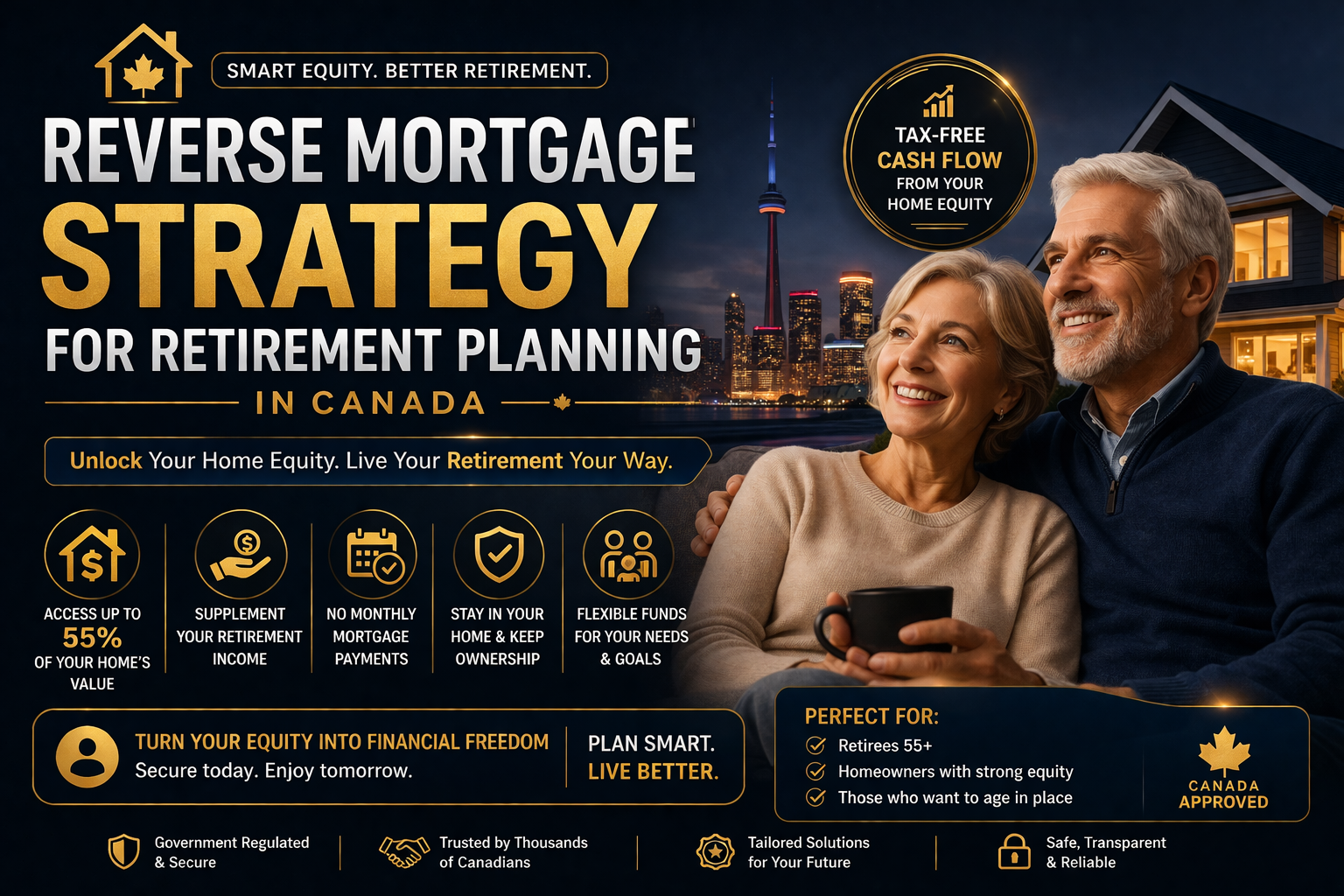
A reverse mortgage allows homeowners aged 55+ to convert a portion of their home equity into tax-free cash—without selling their property or making monthly payments.
Instead of paying the lender, the lender pays you, and the loan is repaid when:
How Reverse Mortgages Work in Canada
Key Features:
Funds can be received as:
Why Reverse Mortgages Are Trending in 2026
Several factors are driving demand:
👉 Many retirees are “house rich but cash poor”—and reverse mortgages unlock that trapped equity.
Strategic Uses of Reverse Mortgage in Retirement
One of the most common strategies is using a reverse mortgage to boost monthly income.
Example:
If your pension and savings are not enough, you can:
Delaying government benefits like:
can increase payouts significantly.
💡 Strategy:
Use reverse mortgage funds temporarily → delay CPP → receive higher lifetime income later.
Selling investments during a downturn locks in losses.
👉 Instead:
This is known as sequence of returns risk management.
Healthcare costs can rise significantly in retirement.
Reverse mortgage funds can help:
Many retirees use home equity to:
Advantages of Reverse Mortgage
✅ No Monthly Payments
Improves cash flow significantly.
✅ Stay in Your Home
No need to downsize or relocate.
✅ Tax-Free Funds
Money received is not considered taxable income.
✅ Flexible Usage
Use funds however you want.
Risks & Considerations
Reverse mortgages are powerful—but not for everyone.
❌ Interest Compounds Over Time
Loan balance grows, reducing home equity.
❌ Lower Inheritance Value
Less equity remains for heirs.
❌ Higher Interest Rates
Rates are typically higher than traditional mortgages.
❌ Early Exit Costs
Penalties may apply if repaid early.
Reverse Mortgage vs Downsizing
Factor | Reverse Mortgage | Downsizing |
Stay in home | ✅ Yes | ❌ No |
Immediate cash | ✅ Yes | ✅ Yes |
Monthly payments | ❌ None | ❌ None |
Emotional impact | Low | High |
Long-term cost | Higher | Lower |
👉 Best choice depends on your financial and lifestyle goals.
Who Should Consider a Reverse Mortgage?
Ideal for:
Who Should Avoid It?
Reverse Mortgage Strategy (Step-by-Step)
Step 1: Evaluate Your Equity
Determine how much equity you can access.
Step 2: Define Your Goal
Income? Investment protection? Family support?
Step 3: Compare Options
Step 4: Work With a Mortgage Expert
Structuring matters more than the product.
Step 5: Plan Long-Term
Consider impact on estate and future finances.
Final Thoughts
A reverse mortgage is no longer just a “last option”—it’s a strategic retirement planning tool when used correctly.
In today’s economic environment, it can help retirees:
👉 The key is strategy, not just access to funds.
In negotiations, I’ll represent you. When it comes to discussing mortgages with their bank, many customers are unsure or uneasy. Even if you have an existing relationship with your branch, I can use that relationship to your advantage when negotiating your mortgage, ensuring that you get the best rates and terms possible. Call me right now for a free, no obligation consultation. Call +1 (431) 999-8485 or Apply now!