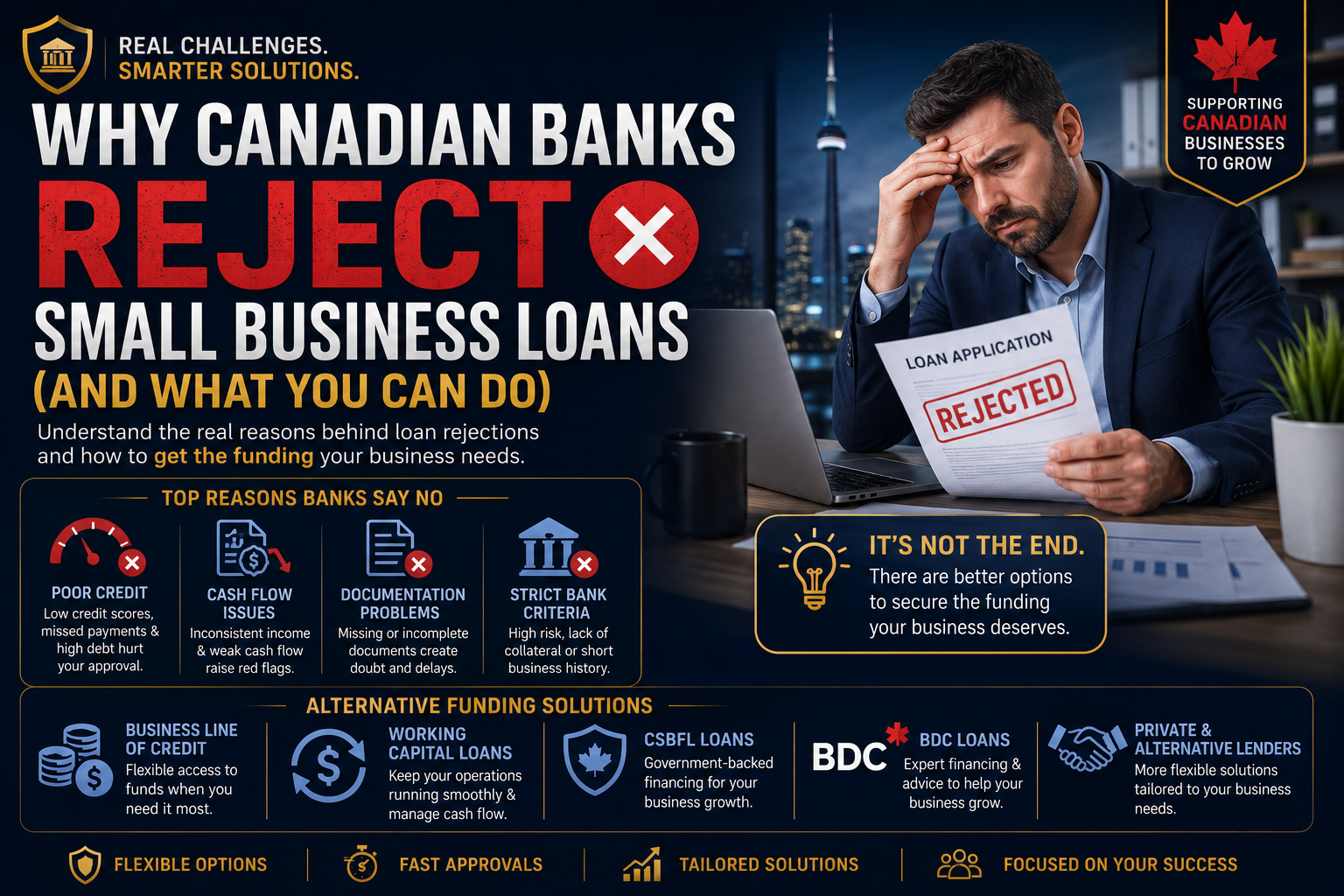
Why Canadian Banks Reject Small Business Loans (And What You Can Do)
Starting or growing a business requires capital, but many Canadian entrepreneurs discover that getting approved for a traditional business loan isn’t always easy. In fact, thousands of small business owners are declined by banks every year—even if their businesses are profitable.
The good news? A loan rejection doesn’t necessarily mean your business isn’t financially healthy. It often means your application doesn’t meet a bank’s specific lending criteria.
In this guide, we’ll explore the most common reasons Canadian banks reject small business loans and the practical steps you can take to improve your chances of approval.
Why Are Canadian Banks Becoming More Cautious?
Banks are responsible for managing lending risk. Before approving a business loan, they evaluate whether your company can comfortably repay the borrowed amount.
They typically review:
- Personal and business credit history
- Cash flow stability
- Business financial statements
- Existing debts
- Industry risk
- Business experience
- Available collateral
If any of these areas raise concerns, your application may be declined.
- Poor Credit History
One of the biggest reasons business loan applications are rejected is poor credit.
Banks often evaluate both:
- Personal credit score
- Business credit profile
A history of missed payments, collections, bankruptcies, or high credit utilization can signal increased lending risk.
Common Credit Issues
- Late loan payments
- Maxed-out credit cards
- Previous defaults
- Tax arrears
- Consumer proposals or bankruptcy
What You Can Do
✅ Check your credit report regularly.
✅ Pay outstanding debts on time.
✅ Keep credit card utilization below 30%.
✅ Avoid applying for multiple loans simultaneously.
Improving your credit score can significantly increase your approval chances over time.
- Cash Flow Problems
Many businesses fail to secure financing because they lack consistent cash flow.
Banks want to see that your business generates enough income to cover:
- Operating expenses
- Existing debt payments
- New loan repayments
Even profitable businesses can struggle if cash flow is unpredictable.
Warning Signs Banks Notice
- Frequent overdrafts
- Declining monthly revenue
- Seasonal income fluctuations
- Negative operating cash flow
What You Can Do
Improve cash flow by:
- Collecting receivables faster
- Reducing unnecessary expenses
- Managing inventory efficiently
- Creating cash flow forecasts
Maintaining healthy business banking activity strengthens your loan application.
- Incomplete or Poor Documentation
Many loan applications are rejected simply because they lack proper documentation.
Banks require detailed financial information to assess your business.
Typical Documents Required
- Business registration documents
- Financial statements
- Tax returns
- Bank statements
- Business plan
- Cash flow projections
- Existing debt details
Missing or inconsistent information creates uncertainty for lenders.
What You Can Do
Prepare a complete loan package before applying.
Working with an accountant or financial advisor can help ensure your documents are accurate and professionally presented.
- Limited Business History
New businesses often struggle because they have limited operating history.
Many banks prefer companies that have been operating for at least two years.
Startups without established revenue may face additional scrutiny.
What You Can Do
If your business is new:
- Prepare a detailed business plan.
- Show industry experience.
- Provide realistic financial projections.
- Demonstrate personal investment in the business.
Government-backed financing programs may also be more accessible for startups.
- High Existing Debt
Banks review your debt obligations carefully.
If your business already carries significant debt, lenders may worry about repayment capacity.
They often calculate debt service ratios to determine financial health.
Common Debt Concerns
- Multiple business loans
- Large equipment financing balances
- High credit card debt
- Personal guarantees on other loans
What You Can Do
Reduce outstanding balances whenever possible before applying for new financing.
Debt consolidation may also improve your financial profile.
- Lack of Collateral
Many traditional business loans require collateral.
This may include:
- Commercial property
- Residential property
- Equipment
- Investments
- Business assets
If you cannot provide sufficient security, banks may decline the application.
What You Can Do
Consider alternative financing options that place greater emphasis on business performance rather than collateral.
- Industry Risk
Certain industries are viewed as higher risk by lenders.
Examples include:
- Restaurants
- Construction startups
- Hospitality
- Seasonal businesses
- New retail ventures
Economic conditions can also influence how banks assess different sectors.
What You Can Do
Demonstrate strong management, stable revenue, and a clear growth strategy to offset perceived industry risk.
What If Your Business Loan Is Rejected?
A rejection is not the end of the road.
Many successful Canadian businesses secure financing through alternative channels after being declined by traditional banks.
Alternative Lending Solutions
Business Line of Credit
A business line of credit provides flexible access to working capital.
You borrow only what you need and pay interest only on the amount used.
Ideal for:
- Payroll
- Inventory purchases
- Seasonal expenses
- Cash flow management
Working Capital Loans
Working capital financing helps businesses cover short-term operational needs.
Common uses include:
- Supplier payments
- Marketing campaigns
- Equipment repairs
- Temporary cash shortages
Canada Small Business Financing Loan (CSBFL)
The CSBFL program helps eligible Canadian businesses access financing through government-backed lending.
These loans are often used for:
- Equipment purchases
- Leasehold improvements
- Business expansion
BDC Financing
The Business Development Bank of Canada (BDC) specializes in supporting entrepreneurs and growing businesses.
BDC financing may offer:
- Flexible qualification requirements
- Startup funding
- Growth capital
- Working capital solutions
Private Business Lenders
Private lenders often evaluate the overall strength of your business rather than relying solely on traditional banking criteria.
They may be suitable if:
- Your credit needs improvement.
- You require fast funding.
- Your income structure is non-traditional.
- Banks have declined your application.
How to Improve Your Chances of Approval
- Build Strong Credit
Maintain good personal and business credit habits.
- Keep Accurate Financial Records
Organized books create confidence for lenders.
- Improve Cash Flow
Consistent revenue demonstrates repayment ability.
- Reduce Existing Debt
Lower debt improves financial ratios.
- Prepare a Professional Business Plan
Clearly explain:
- Your business model
- Revenue sources
- Growth strategy
- Funding purpose
- Work With a Business Financing Specialist
Experienced financing professionals understand lender requirements and can help structure stronger applications.
Final Thoughts
Being declined for a business loan can be frustrating, but it doesn’t mean your business lacks potential.
Canadian banks often reject applications due to:
- Poor credit
- Cash flow concerns
- Documentation issues
- High debt levels
- Limited operating history
Fortunately, there are many ways to strengthen your financial profile and explore alternative funding solutions.
Whether you need a traditional business loan, working capital financing, a CSBFL loan, BDC funding, or private lending, choosing the right strategy can help your business secure the capital it needs to grow.
FAQ
The most common reasons include poor credit, weak cash flow, insufficient documentation, high existing debt, and limited business history.
Yes. Alternative lenders and private financing solutions may still be available, especially if your business has strong revenue or valuable assets.
Business lines of credit, working capital loans, and certain government-backed programs may have more flexible requirements than traditional bank loans.
The application itself may create a hard inquiry, but being declined does not directly lower your credit score.
Yes, but lenders may require additional financial documentation for self-employed applicants.
In negotiations, I’ll represent you. When it comes to discussing mortgages with their bank, many customers are unsure or uneasy. Even if you have an existing relationship with your branch, I can use that relationship to your advantage when negotiating your mortgage, ensuring that you get the best rates and terms possible. Call me right now for a free, no obligation consultation. Call +1 (431) 999-8485 or Apply now!